Building trust at the intersection of AI and cybersecurity
TRACES brings together research in trustworthy and responsible AI, explainable systems, and human-centered cybersecurity to better understand AI behavior and build safer, more reliable technologies for people and communities.

Project Overview
NSF III: Medium: “MUDL: Multidimensional Uncertainty-Aware Deep Learning Framework” (Grant #: 2107450, Award #: 2107450)
VT PI: Jin-Hee Cho; UTD Lead PI: Feng Chen; UDC PI: Dong Hyun Jeong. 10/2021–06/2026.
“AI-Powered Solution for Cyber Scam Prevention: Empowering Community Support for Older Adults”
PI: Junghwan Kim; Co-PI: Jin-Hee Cho. 03/2025–02/2026.
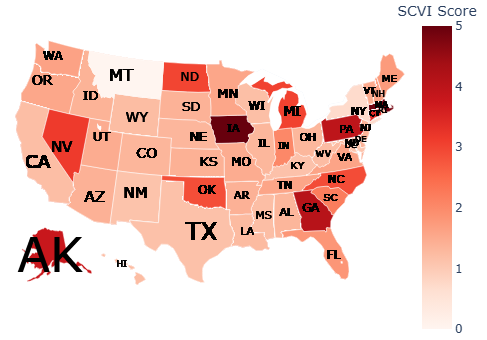
“From Data to Defense: Designing Social Cyber Vulnerability Measures to Protect Older Adults Online”
Lead PI: Hemant Purohit; VT PI: Jin-Hee Cho; Co-PIs: Fengxiu Zhang and Chang-Tien Lu. 05/2024–12/2025.
Trustworthy & Responsible AI
We investigate how bias, uncertainty, and other factors influence the reliability of AI systems. By developing evaluation methods that go beyond traditional performance metrics, our research aims to better understand when AI outputs can be trusted and where their limitations may emerge.
Behavioral AI & Data
We explore behavioral attributes in cybersecurity data to better understand patterns that conventional technical features may overlook. This perspective provides richer context for analyzing security-related behaviors and supports more meaningful evaluation and development of AI-driven cybersecurity systems.
Explainable & Grounded AI
We examine whether AI-generated security explanations are not only understandable and convincing, but also accurate and meaningfully grounded in evidence. Our research explores explainability, semantic alignment, and evaluation methods that help reveal when seemingly credible explanations may actually be misleading.
Human-Centered Cyber Safety
We explore how AI can support cyberscam detection, prevention, education, and training while keeping human needs at the center of security design. Our work also considers community-based approaches that empower people, particularly those vulnerable to increasingly sophisticated digital threats.
Projects and Publications

VEXA
2026 • AIES
Grounded but Misleading: Evaluating Semantic Alignment in AI-Generated Security Explanations

Review of XAI-based Cyberscam Prevention
2026 • Under Review
Explainable AI for Cyberscam Prevention: A Survey of Multimodal Scam Detection, Evaluation, and Human-Centered Training

Uncertainty-aware Bias Quantification Framework
2026 • Under Review
Uncertainty-Aware Metrics for Revealing LLM Bias Toward Behavioral Data Attributes in Cybersecurity.


X-MAP
2026 • PAKDD
eXplainable Misclassification Analysis and Profiling for Spam and Phishing Detection

Scam Shield
2025 • IEEE BigData Workshop
Multi-Model Voting and Fine-Tuned LLMs Against Adversarial Attacks



RESONANT
2024 • ACM AACD
RESONANT: Reinforcement Learning-based Moving Target Defense for Credit Card Fraud Detection


Online Social Deception Survey
2020 • IEEE ACCESS
Online Social Deception and Its Countermeasures: A Survey

Personality-Based Phishing Vulnerability
2016 • IEEE CogSIMA
Effect of personality traits on trust and risk to phishing vulnerability: Modeling and analysis